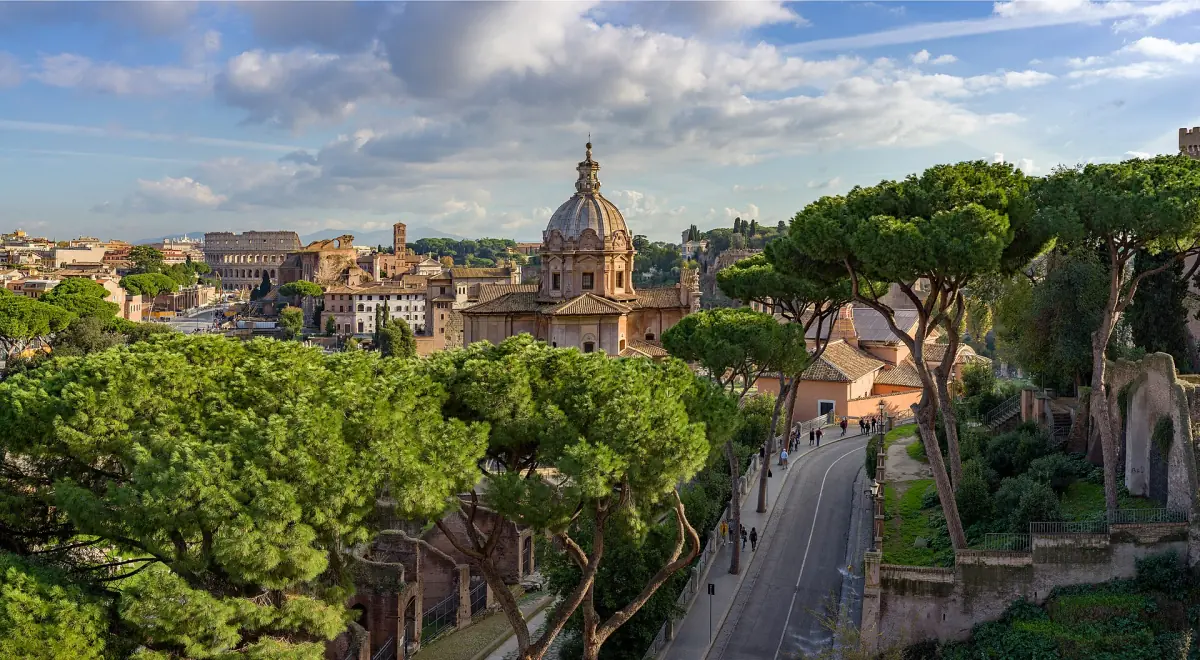
The Roman Forum in short
The Forum was first a marshy valley floor. Once it was drained, the space developed from the late 7th century BC into a public centre. Politics, religion, trade and the law courts all met here, which explains why the ruins include temples, basilicas, arches and a Senate House.
The site looks like a jumble because it grew over many centuries. Later buildings sit on earlier ones, and some ancient buildings survived only because they were reused as churches. Reading the Forum means reading layers.
This is an independent guide, not run by the Parco archeologico del Colosseo or any other body. Visit details are on the pages for tickets and opening hours.
Timeline of the Forum
The main stages, with a monument you can still find.
| Period | What happened | What to look for |
|---|---|---|
| Late 7th century BC | The valley floor is drained and the Forum develops | The open central square |
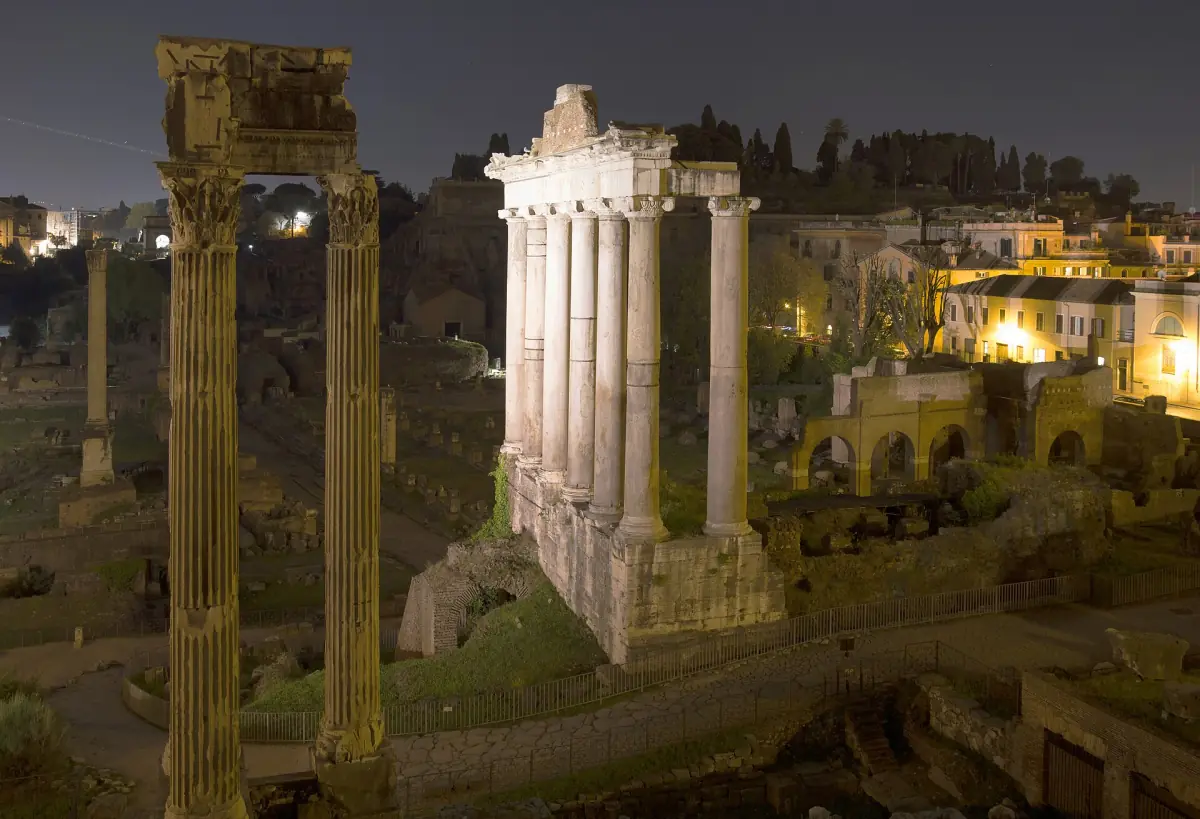
| 484 BC | Temple of Castor and Pollux dedicated | Three Corinthian columns of the rebuilding of 6 AD |
| 2nd century BC | Large civic basilicas appear, used for the law courts | – |
| 2nd to 1st century BC | The Cloaca Maxima is vaulted over | – |
| 29 BC | Augustus completes the Curia begun by Caesar | The Curia Julia |
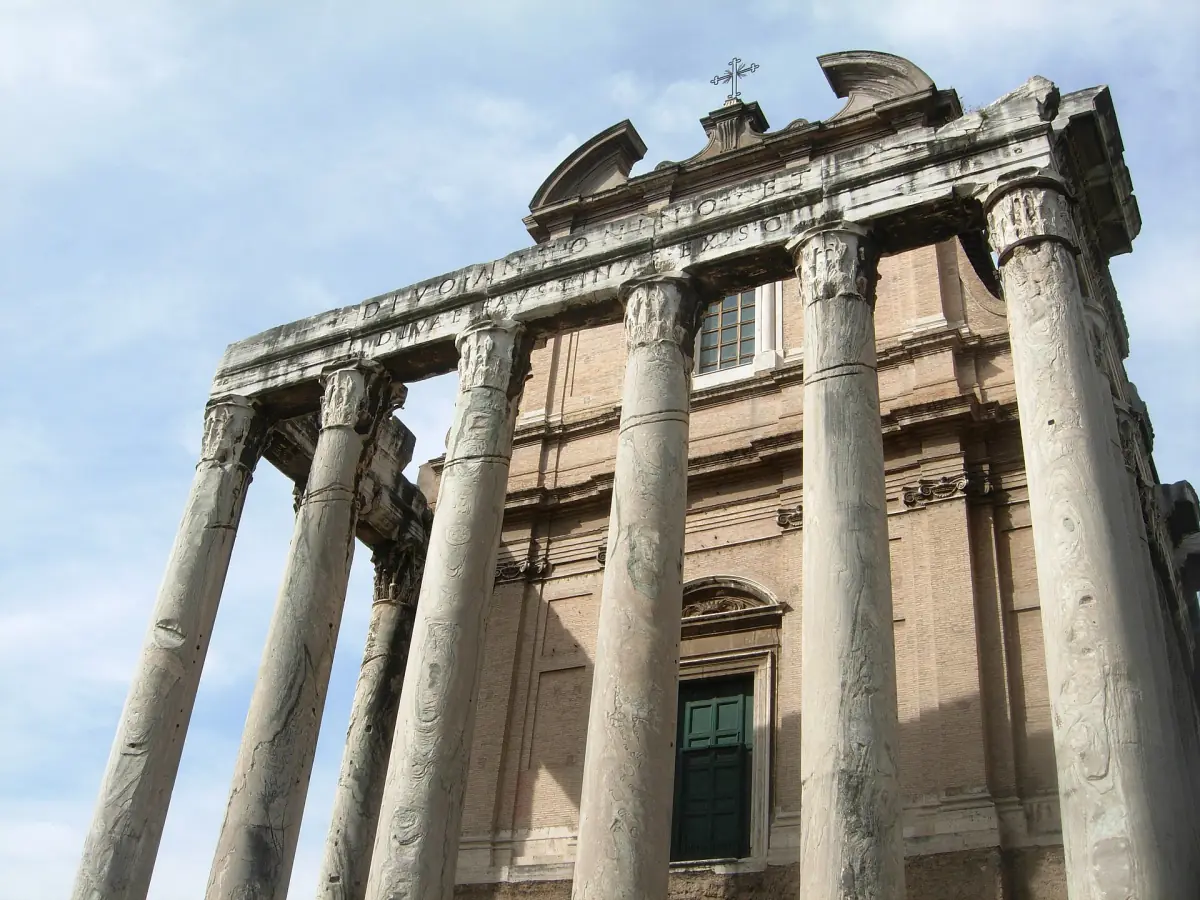
| 161 AD | Temple dedicated to Antoninus and Faustina | Six front columns of cipollino marble |
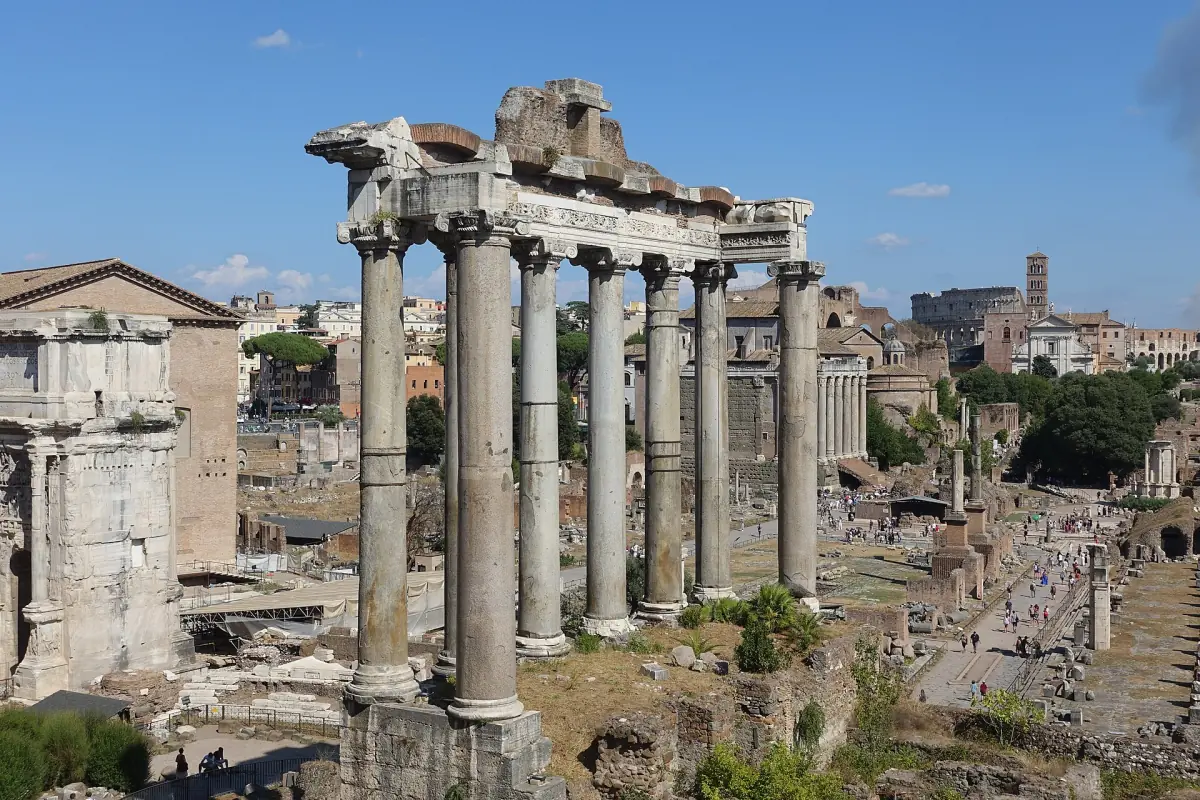
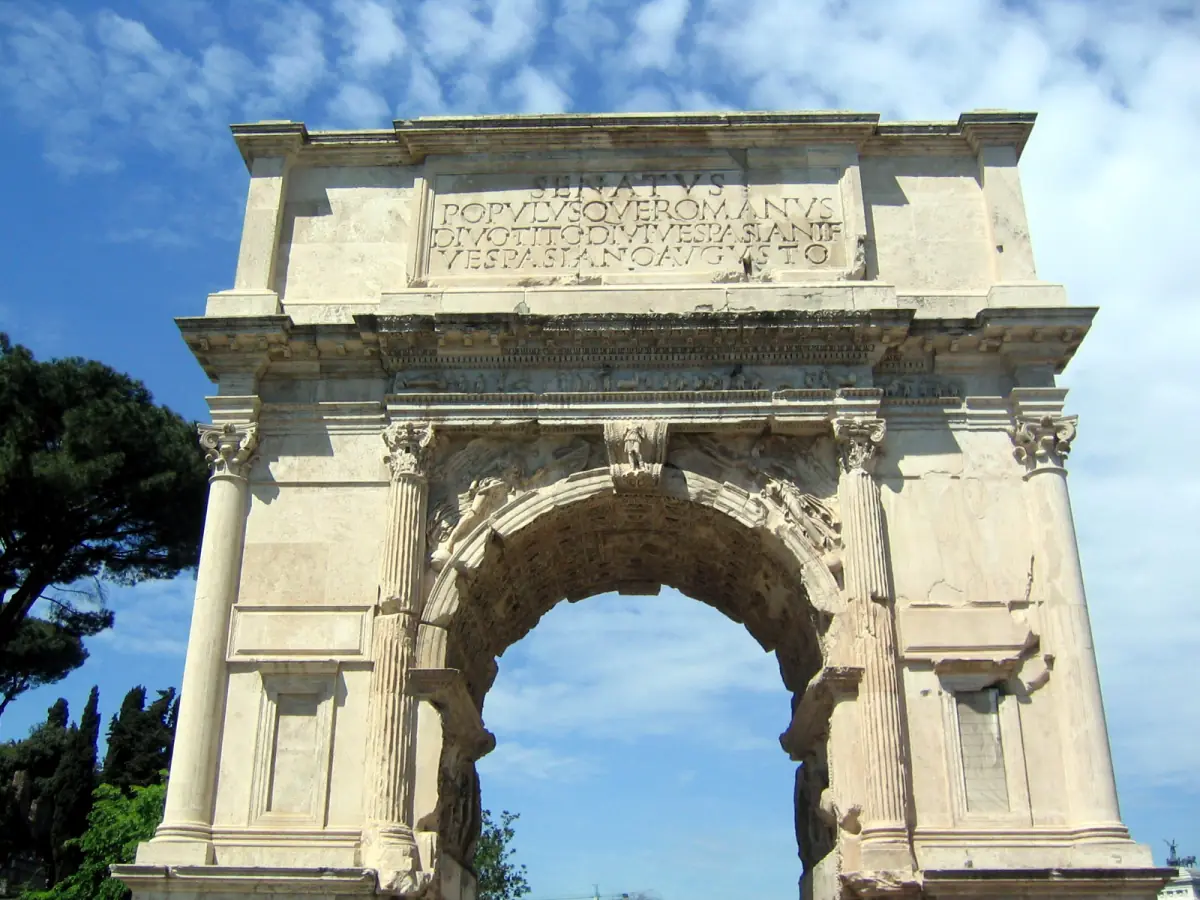
| 203 AD | Arch of Septimius Severus | The three-arched monument |
| 308 AD | Basilica of Maxentius begun, finished by Constantine | The north aisle with its coffered vaults |
| 608 AD | Column of Phocas | The last monument built in the Forum |
Roman Forum history tours
Guided walks and combined visits that explain the Forum and the Palatine, with live prices and availability. Check which areas each visit includes.
Draining, the Cloaca Maxima and the Republic
The first step was to drain the valley. Roman tradition links the oldest part of the Cloaca Maxima to the draining under the Tarquin kings. That is tradition, not a proven date. The drain began as a canalised watercourse running from the Forum toward the Tiber. It was open at first and was vaulted over in the 2nd to 1st century BC. No single architect is known, and the drain was not built to one design.
In the 2nd century BC large civic basilicas were added. These were halls for the law courts and public business, not churches. Under the Republic, politics and religion sat beside trade and justice. Priestesses tended the sacred fire in the round Temple of Vesta, and the Rostra, the speakers' platform, took its name from the ship's beaks that decorated it.
The Vesta cult goes back to Roman tradition and the king Numa Pompilius, but the visible building belongs to a restoration under Julia Domna at the end of the 2nd century AD. The six priestesses served 30 years each.
The Temple of Caesar
The Temple of the Divine Julius is the monument to the deified Caesar. The Senate decision for the temple is dated to 42 BC. It belongs with the Curia and the Basilica Julia as a set of places tied to his career.
Do not call it Caesar's tomb or the place where he was killed. It is neither.
The Curia that Caesar began is a better building to walk into. Read the Curia Julia page for what the interior shows and which tickets list it.
Emperors, new squares and late monuments
By the end of the Republic the old square had become too small.
More space needed
The old Forum space no longer fitted display and administration. The emperors added honorary monuments and temples to deified rulers, and built their own forums next door.
Imperial Forums →Late Roman building
The Basilica of Maxentius was begun in 308 AD and changed and completed under Constantine. It was a civic basilica. Parts of Constantine's huge statue are now on the Capitoline hill, not in the Forum.
The last monument
The Column of Phocas of 608 AD is the last monument built in the Forum. After that the area was reused rather than extended.
Churches and rising ground
Many ancient buildings survived because they became churches. The raised door of the church built into the Temple of Antoninus and Faustina shows how high the ground once stood, before modern excavations removed the later layers.
Excavation and restoration
Later soil layers were cleared away in modern excavations. The Arch of Septimius Severus was used as a fortification in the Middle Ages and was gradually buried. It was dug out again and restored in the 19th and 20th centuries. This is also why the ground level you walk on is lower than in later centuries.
For a visit, link the history to the walk. Start with the layout on the map page and follow the route from the temples to the Palatine. The Colosseum next door tells a different story, covered in the Colosseum guide.
Roman Forum history: frequently asked questions
How did the Roman Forum begin?
It was a marshy valley. After it was drained, the space developed from the late 7th century BC into the public centre of Rome.
What was the Cloaca Maxima?
It was a drain that began as a canalised watercourse from the Forum toward the Tiber. It was open at first and vaulted over in the 2nd to 1st century BC. No single architect is known.
Is Caesar's temple his tomb?
No. It is a monument to the deified Caesar, and the Senate decision is dated to 42 BC. It is not his tomb and not the place where he was killed.
What was the last monument built in the Forum?
The Column of Phocas, from 608 AD.
Why is the ground so low today?
Later layers of soil were removed in modern excavations. The raised church door at the Temple of Antoninus and Faustina shows the earlier ground level.